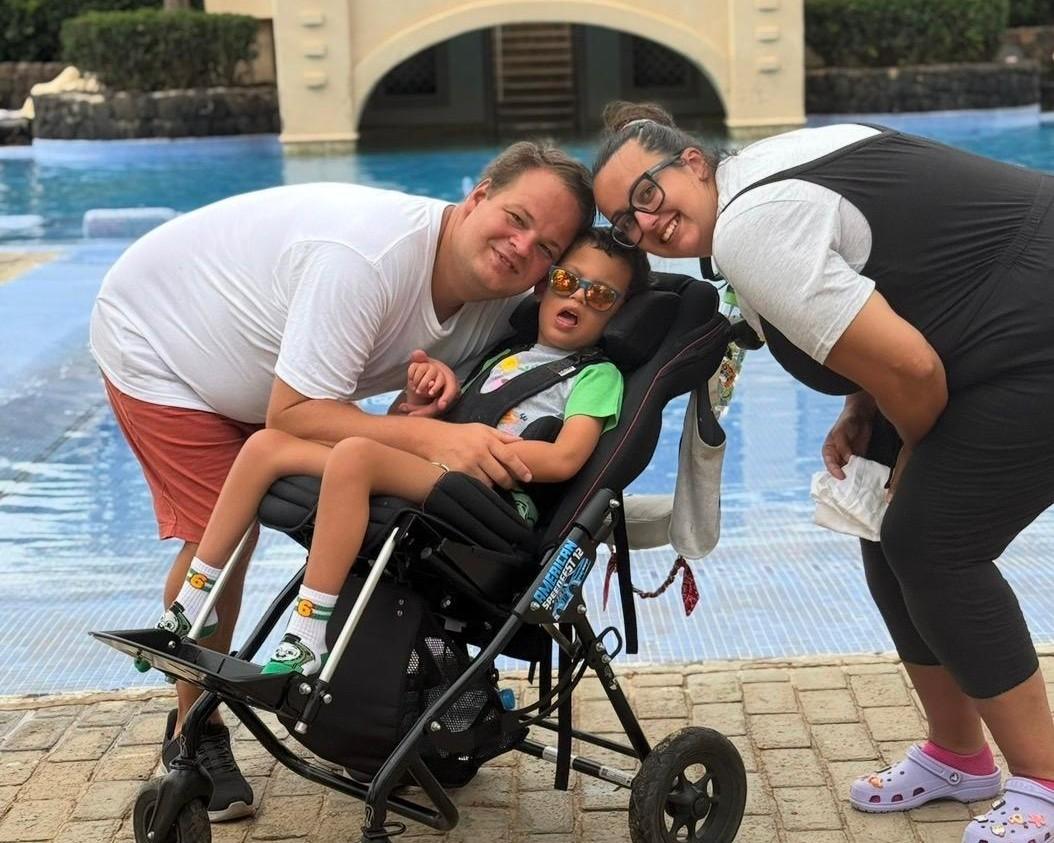
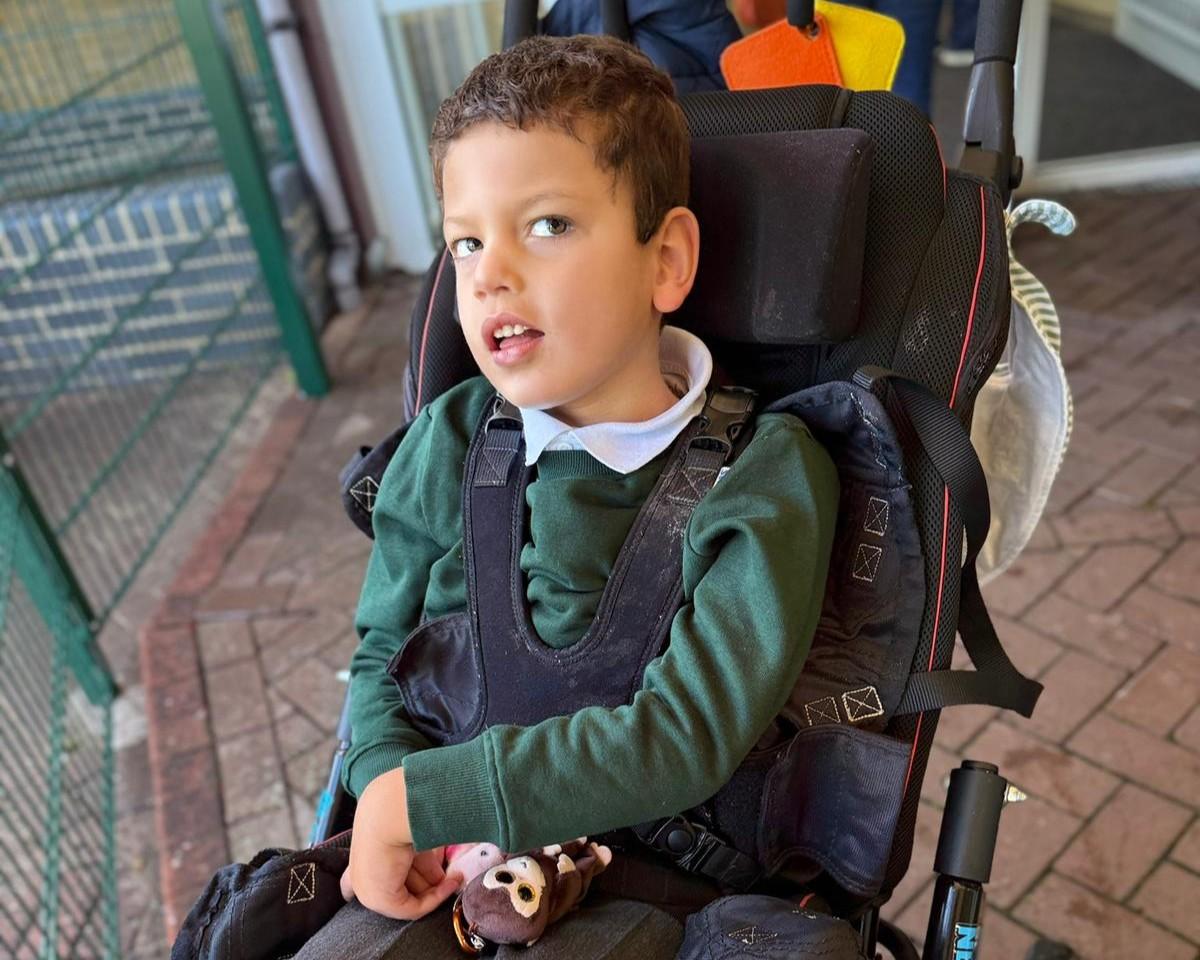
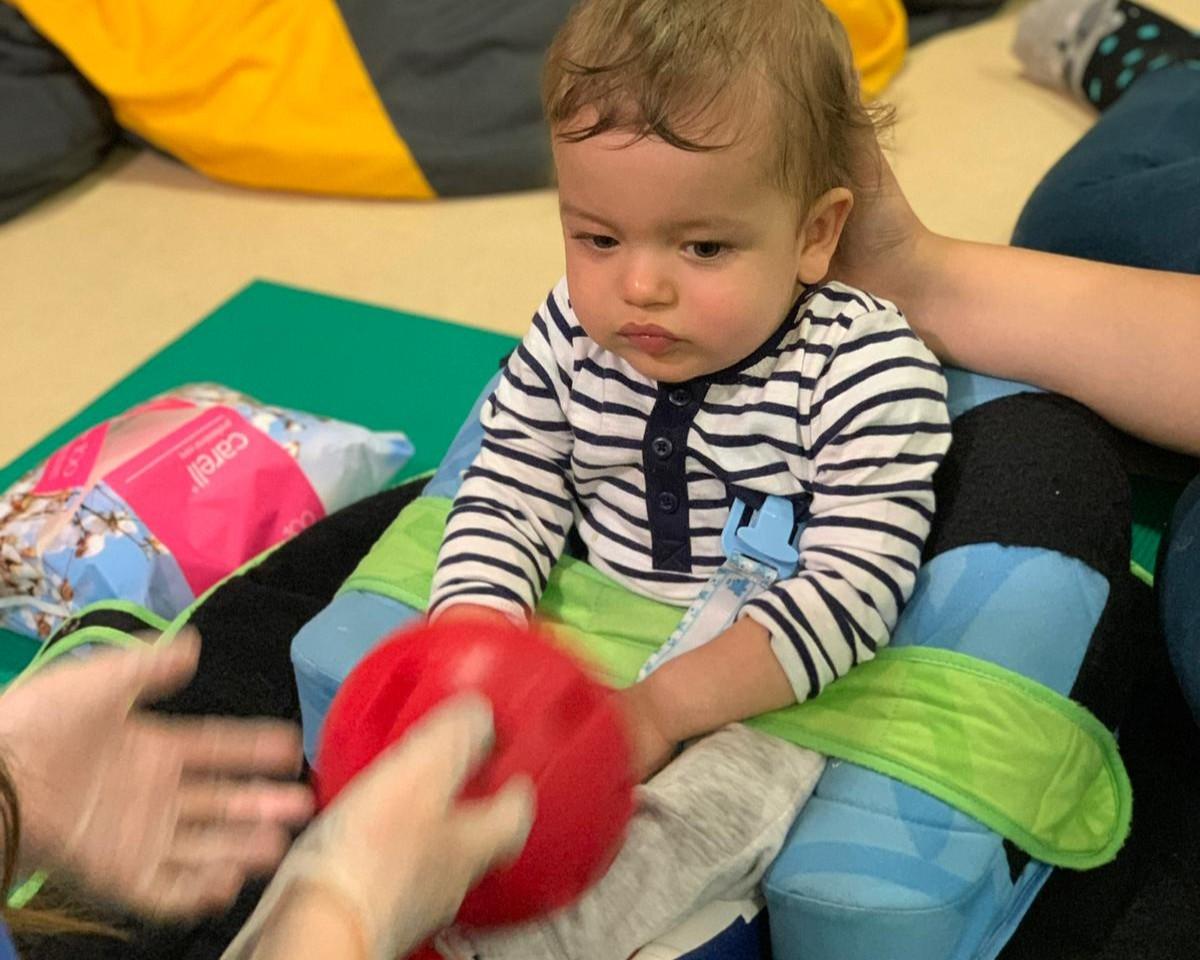
Sebastian, known as Seb, was born happy and healthy in 2019. He lived at home in Surrey with mum Shauna and Dad Arnis, and was growing and developing well.
At the age of ten months, as the Covid pandemic hit the UK, he became unwell and lethargic with a high temperature. His parents gave him Calpol and fluids, but as his condition deteriorated over several days, they decided to call 111, but couldn’t get through. As his condition worsened, they called an ambulance and Seb was admitted to Epsom Hospital.
Shauna remembers: “No one could tell us what was happening, but we could see him get worse, he was just deteriorating in front of our eyes. He just wasn’t Seb – he was like a shadow of his former self. He wasn’t responding. In hindsight, we believe we saw him have a stroke right in front of us.”
Intensive care
Seb’s condition continued to worsen, and the cause of his illness had yet to be diagnosed. The team at Epsom Hospital advised that he needed to transferred for specialist care.
After six hours, Seb was stabilised and admitted to the Paediatric Intensive Care Unit (PICU) at St. George’s hospital in London. Over the next few days, it was discovered that Seb had Pneumococcal, an infectious disease, which led to him developing sepsis, meningitis and meningoencephalitis, which caused him to have a stroke.
Darkest days
Shauna and Arnis were told that Seb was unlikely to wake up and that they should prepare to say goodbye. Their family rallied to support them and visited Seb one at a time due to Covid regulations.
Tests showed that Seb has multiple brain lesions, and after 14 days, the team started weaning him off the medication that was sedating him.
Shauna tells us: “As they were weaning him off the medication, then along came the epilepsy. So they would start to wean him off, then he’d have a seizure so the medication would go back up. It took them nearly three days to extubate him to make sure that he could tolerate it and he did wake up.
“It was really hard. He did wake up, which was amazing, but he was a shadow of himself. A completely different kid. He was just, like, a bag of bones. That's literally what Seb was.”
The effects of the brain injury
After a few more weeks in hospital, Seb was discharged and his parents were left to care for him at home alone. Seb was unable to move or eat independently and was being fed through a nasogastric (NG) tube. Support was delivered by WhatsApp due to Covid restrictions.
After three months coping at home, Seb started his rehabilitation placement at The Children's Trust.
Shauna recalls: “We just needed help. This wasn't something that we'd ever experienced before and Covid just made things ten times, not even ten times, a million times, harder to access anything.
“In hindsight I was grieving. I was grieving the loss of that part of my child. We didn’t know where to turn."
“The Children's Trust... it was like a lifesaver. It was someone who knew what they were doing. They knew what had happened to Seb – how to understand it, how to interpret it, and then use that to try and support Seb into getting something back.”
Accessing specialist care
When he arrived at The Children’s Trust, the team of experts set about assessing his needs and seeing where they could support the family.
Shauna tells us: “it was pretty much a starting from scratch, you know, starting back at the basics. I remember the speech and language therapist looking at ways to try and reintroduce food because he'd lost his ability to move his mouth, he couldn't remember how to do it. There was a lot of cohesive working between the physiotherapist and the occupational therapist, because Seb had paralysis on one side as well, so that made it more difficult for him.
“I think the biggest thing for us was they allowed us to get an understanding of what had happened and how we can help Seb. They helped us adapt to this new normal we had and gave us the perseverance to keep going, to just keep trying.”
“Seb would not be where he is without The Children's Trust. I can, hand on heart, say that with every ounce of my being.”
Continued support
Seb returned to The Children’s Trust aged two, for another rehabilitation placement.
Shauna reflects: “The second time here he had music lessons and would go in the soft play with his occupational therapist. His brain irritation had gone so he was much calmer and more interested in what was going on.
“Seb's stubborn side started coming out more, but it wasn't a bad stubborn of ‘I can't do it, leave me alone’, it was more of ‘I can't do it, but I'm still gonna try - and I'll try, and I'll try, and I'll try’. Seb was getting used to his new normal and had that bit more motivation. He was just constantly wanting to strive, and to try, and that's all you can ask for.”
After his placement, The Children’s Trust community team continued to support Seb as he transitioned home and to nursery.
Shauna tells us: “Seb went to a mainstream nursery; we found a mainstream nursery that would take him. The team spoke to his nursery, to educate them and help them to understand. The family meetings that we had at the beginning, you guys attended one of them, and you were very keen that other people understood a child with brain injury.”
Living with a brain injury
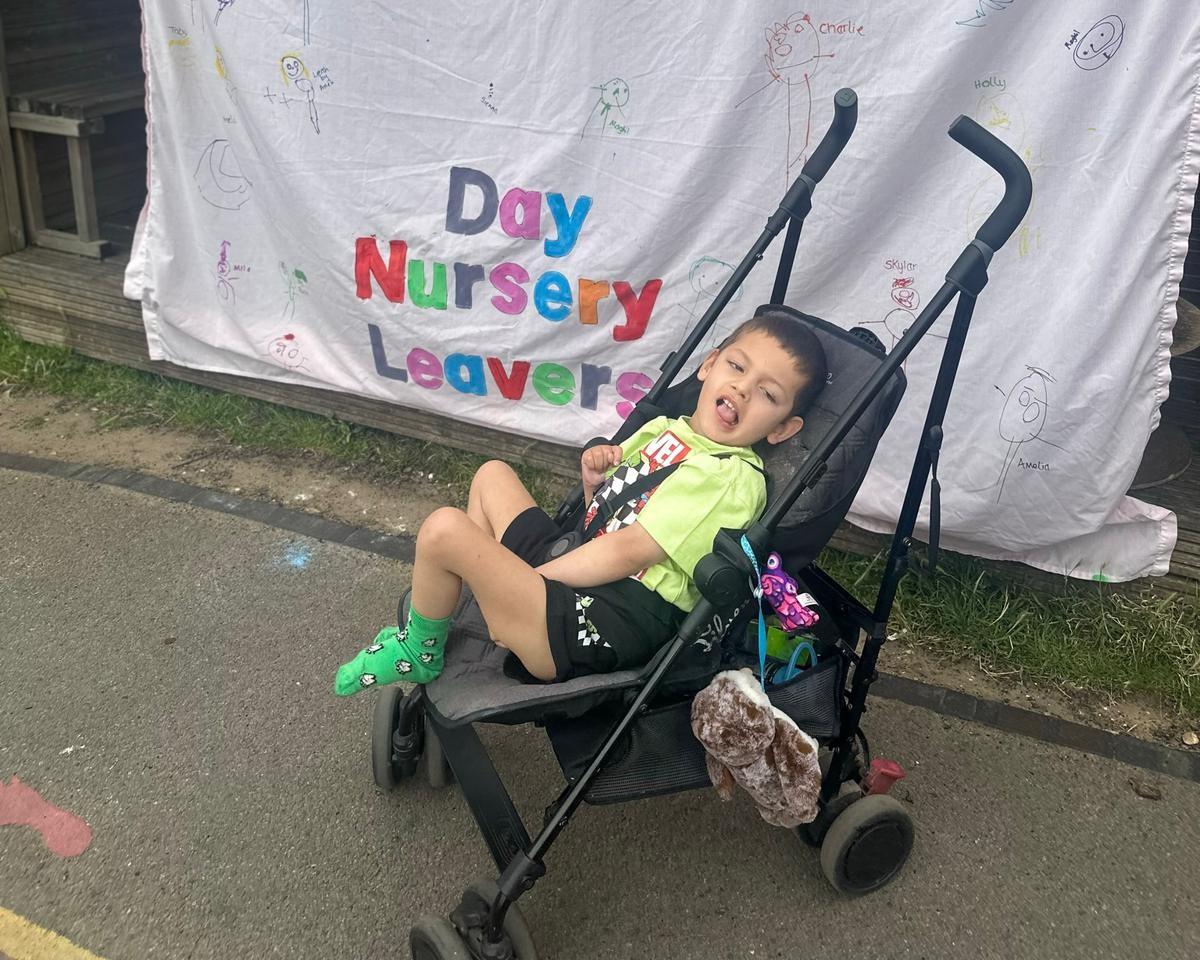
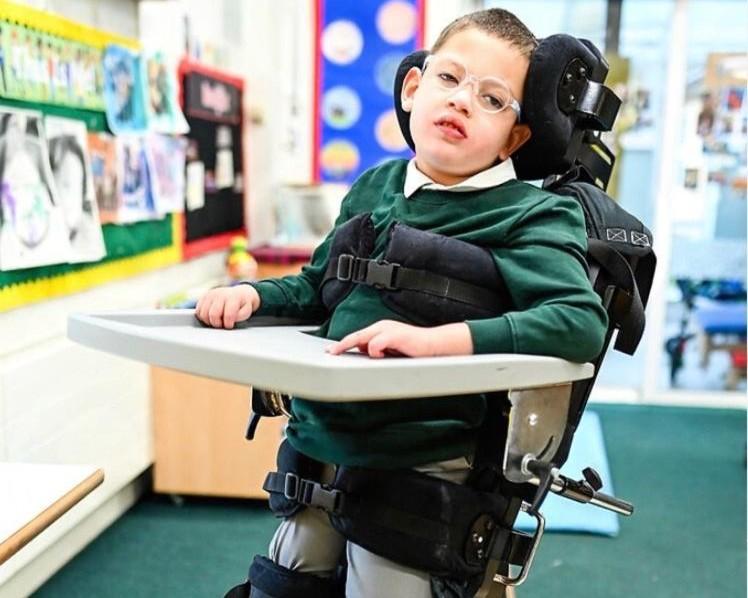
Seb’s brain injury means that he has long-term disabilities. Seb is unable to walk, talk, sit unaided or feed himself.
Shauna tells us: “He's such a happy child, honestly, we are so blessed. But he relies on a wheelchair, he relies on an eating system, he relies on a walker, he uses standing frames at school. Our house is full of equipment.”
Seb attends a school for children with disabilities, where he loves his routine, friends and weekly swimming session. He loves being active and out and about amongst lots of people – especially the supermarket. Whilst he doesn’t talk in words, he communicates through gestures and vocalising. Shauna says: “He's not a quiet child. If you ever wonder if Seb's around, if you can't hear him, he's not there!”
Childhood disability
Despite his challenges, Shauna shares that Seb’s cheeky personality continues to shine: “Whilst Seb's brain injury has affected his development, and he has epilepsy as a result of it, he hasn't lost his personality; he's still got the same cheekiness from a six-year-old, but his life just looks different.”
Speaking about children with disabilities, Shauna tells us: “I think it's just important to remember that children with disabilities are still children. They may not be able to talk to you, but they understand and pick up on a lot more than people sometimes realise. You may think they can’t do something, like come to a birthday party or take part in an activity, but the experience is just as relevant to them, they're no different.
“Caring for Sebastian means constantly thinking ahead and interpreting the things he may not always be able to explain himself. It is learning his routines, his signals, his frustrations and his little ways of communicating, even when there are no words. It can be exhausting, because you are always switched on, but it is also full of love, patience and small wins that other people may not always see. Being his carer means being his advocate, his safe place and sometimes his voice when he cannot use his own.”